Days 4- 6 Erasmus+ study trip to Malta
30 maart 2026
Wednesday March 25, 2026
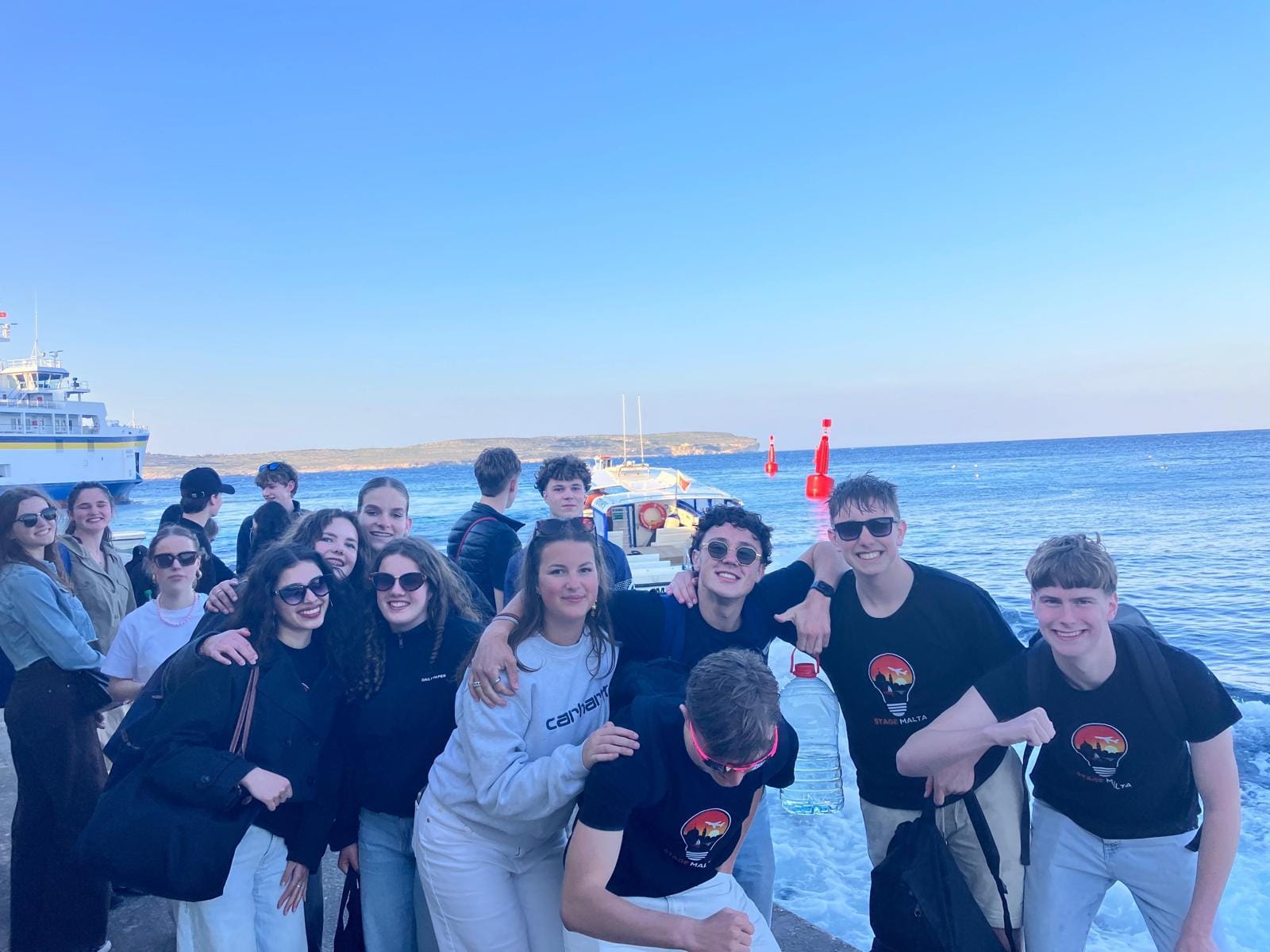
Today we took the ferry to Malta’s sister island, Gozo.
Our first stop was the Savina Artisan Centre, at The Magro Food Village in Xewkija. We enjoyed an inspiring presentation about the Magro brothers and the vision for their products. The company has been run by the Magro family for four generations, and its key concepts are integrity, reliability, quality and good taste. The company savours the strong link with the Gozo community, especially with those farmers that provide them with produce, such as goat’s milk for their haninis and tomatoes for their tomato pastes and other related tomato-based products. Their concept showed us that innovation can be rooted in tradition. We were impressed by the fact that a local company could have such global impact, distributing its iconic products far beyond the local market.
Lunch consisted of a local specialty, the Gozitan ftira or pizza, on the lovely red sandy beach of Ramla Bay. Students had time to take a swim, collect pebbles or just simply enjoy the sun.
Our final stop was Gozo’s capital city Victoria, where we visited the majestic Citadella, a glorious fort towering over the island’s villages and hills.
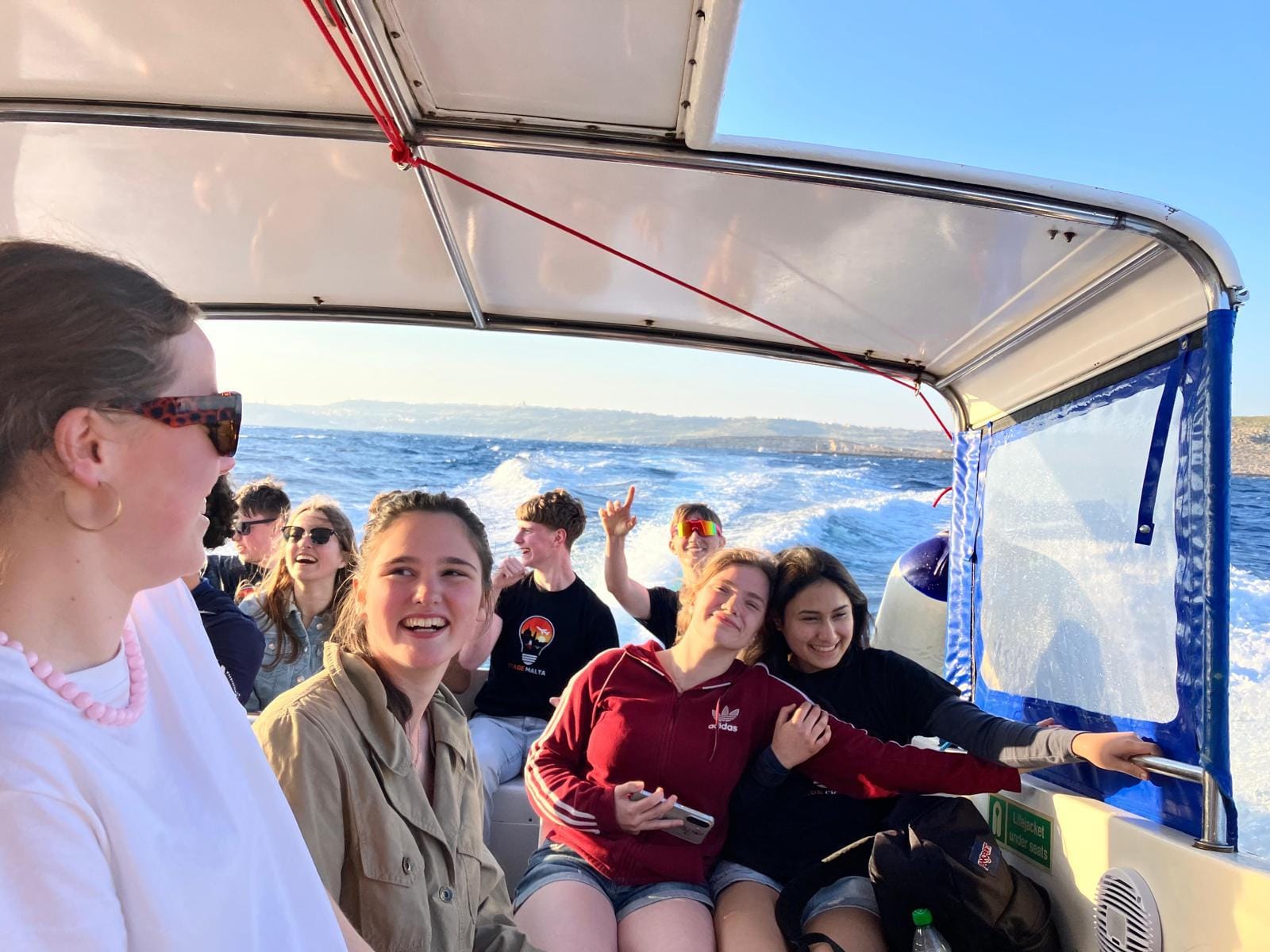
The wind was favourable, which meant we could brave the waves in a speedboat. On our way to the main island, we caught a glimpse of the Blue Lagoon and the impressive rock formations.
On arrival at our guesthouse, we were once again welcomed by the smell of home-cooking.
Thursday March 26, 2026
After another lovely breakfast buffet we were taken to Valletta. Here the students worked on the research that they had started at home. Their research is varied, ranging from the history of Gozo & Hagar Qim and Mnajdra Archeological Park, Maltese food and sports, to water management and sustainability.
In the afternoon, we made two company visits. The first company to welcome us on their premises was Lifelong Learning, an adult learning centre focussing on teaching basic skills such as literacy and A-levels, life skillls such as sewing and IT, and active citizenship. Our students were introduced to the educational system in Malta, the integration programme for newcomers, and the problems that Maltese as a language is currently facing.
Students were made aware that today’s society requires lifelong learning, not only on the workfloor but also as part of their personal development and fulfillment. It was brought home to them that adult learning is also part of the agenda of the European Union, with platforms such as EPALE.
The second company we visited was Exante situated on the 18th floor of the Portomasso Business Tower in St Julian’s. This is a financial and technological company that aims to democratise access to global financial instruments for professional traders and institutional investors.
Our students were introduced to the versatility of the financial sector and had the opportunity to speak to many different employees. Again it was brought home to students that although school and college/ university will provide a good foundation, it is the choices made along the way that determine where you go. Exante employs many employees from outside Malta. They talked about their journeys on the international labour market as graduates, and showed our students that indeed the world is your oyster: you can do anything you wish or go anywhere you want in your life because you have the ability to do so.
Friday March 27, 2026
Over the past week, the students have grown fond of the drivers of the mini-vans who manage to get them safely through Malta’s hectic traffic every day.
Today, they took us to the head office of the Malta Freeport Terminals. Malta’s maritime relevance is something we had already encountered in the harbour of Valletta, with its Cruiseport and superyachts. At Malta Freeport, we were introduced to Malta as a transhipment hub in the Mediterranean. We learned about past and future developments for the terminals and cranes. We were introduced to the software used to plan the transhipments and some students were even allowed to take place in a simulator for operating one of the megamax quayside cranes. Students also discussed the impact of the war in Iran on transhipment, the company’s environmental policy and sustainability goals, and their views on social responsibility.
During lunch, a typical Maltese flatbread called ftira, we could experience with our own eyes the docking of a containership and the preparations for transhipment.
Afterwards we were taken to Ħaġar Qim and Mnajdra Archaeological Park , a Unesco World Heritage site. Ħaġar Qim means “standing stones” or “worshipping stones” and has recently been dated back to 3800 BC. The guide introduced us to the ways of the temple-builders and some of the artefacts like the figurines of the “fat lady of Malta”, also known as the Venus of Malta. While standing on the actual site it dawned on us that these people were far from primitive and had dealt with the demands of their day and age in a very advanced way. The fact that the archaeological park has been included in the World Heritage List shows that in order to move into the future we also have to include the past. Like these farmers from the Neolithic period, we face similar challenges and yet they managed to build a structure that is still relevant today.
After the tour we walked to Zurrieq Valley, which is close to the Blue Grotto. Unfortunately, the strong winds made it impossible for us to go on a boat trip to the Blue Grotto. The alternative, having an ice cream with a stunning view of the island of Filfla, was quite enjoyable. Dinner back at the residence was a perfect ending to a perfect day.